Who does Journeys | The Road Home serve and how?
Half of our clients are on our prevention track, which means housed but unstably. The services we provide to this group are to keep them in their houses, because it’s far better to stabilize, or to help people downsize to get into a more manageable place. The other 50% of our client base have lost their homes. These are the individuals who we work with at PADS (Public Action to Deliver Shelter) locations to try to keep them off the street and out of the elements while we work to get them stably housed.
Through our PADS program, we partner with churches to provide emergency shelter, and we provide administrative and clinical support including volunteer training and insurance for the sites. We pay for the sites’ laundry. We provide transportation for the guests to and from the day center to the sites. We also provide a program manager who oversees all the sites so we can do case reviews to assess needs and determine eligibility for services. Then we turn around and provide information to the new sites for the next day, so they’re informed and equipped and ready to go. We do background checks for all participants in the emergency shelters and we have negotiated relationships with the police departments to have liaison officers every night that the PADS sites are open.
Through Pathways Housing Readiness we prepare people who are ready to move out of homelessness to become housing-ready while providing referrals and placement in stable housing. Once these clients are housed, our clinical team provides them with the support and counseling they need to reach their goals.


Looking back, what are some of the life experiences that helped to prepare you for your current role?
I tend to go for the underdog and really plow through things. If I were to pinpoint where that passion came from, I’d say it’s tied to my experience at age 13 when I became one of only two young ladies at St. James Catholic School who had divorced parents. In every class I was in, I had to justify my definition of family versus what was being taught. I had to continue to remind myself that I had a place at the table. I realized then that maybe things in life aren’t always going to be fair, and maybe it has nothing to do with you. Maybe it has to do with your placement. Maybe it has to do with what’s been introduced to you. Maybe it has to do with your environment, things that you might not have control over.


In my very early days of running Journeys | The Road Home, my (now ex) husband had a very severe issue with alcohol. He got himself in a lot of trouble that landed him in jail and our children and I became homeless. My board of directors for Journeys rallied around me by locking down my job, making sure I was okay, and keeping questions about my situation at bay, but what really saved me in that moment was family. My sister, who was nine months pregnant, opened up a room for my kids and a couch for me. We enrolled my children at St. James, where they would be protected (a very full circle moment), and I got my footing. Not everybody has that kind of support. Every program I’ve made decisions about moving forward for Journeys would have made my life better if it had been in existence when I was in that situation myself.
What are some of the major challenges you face in your work?
NIMBY (not in my back yard) issues are real. When I was trying to do housing, not one town or village wanted me to do it within their boundaries. So, I created my own 501(c)(2), which is a real estate holding company. All it does is hold property for charitable purposes. I started that so that I could move around town without anybody knowing I was coming. With the help of two important donors, I now have two affordable housing apartment buildings. They were farmhouses right next door to each other, and I flipped them. They’re also zoned in the multi-use, one-mile commuter district, which means I could eventually level them and campus them up and have a 10 to 13 floor apartment building with retail on the bottom. Currently we have 16 individuals who were once homeless living there. We’ve been operating it since 2009, and I’ve only faced one eviction. That’s much better than regular market real estate and that’s because of our structure.
As another example, we had an individual who had been staying on a bench downtown for a very long period of time. The individual didn’t want to be in a congregate setting. They felt safer on this bench in this very visible location. The restaurant next door said, “You know, we don’t care. It’s not affecting our business,” but the people living in the condo behind the bench cared because they felt it affected their ability to attract buyers. I attended one of the committee of the whole meetings for the village, and I said, “You know, we all know there’s a moral issue here, but I’m not in the business of defining anybody’s morals. I don’t know whose morals are right and whose morals are wrong, but I can tell you what mine are. This individual has the right of choice. We have the right to offer resources. We don’t have the right to define what’s best for them.”
My recommendation was to create a task force. If you have a complex situation where there are more issues than one agency can solve, you need to bring all of the players together so we all know what resources we’re bringing. Then we can make really tangible solutions happen, and we can say to the individual, “What would it take to get you off the bench? What makes you feel you’re standing on solid ground? What would make you feel you’re driving the car?” At one point, the village wanted to do a consortium to bring all the surrounding municipalities together, but that approach would’ve put lots of layers between the problem and the solution. It would’ve diluted responsibility. In the end, a task force was created and the situation has since been resolved. That kind of stuff gets me motivated. You can’t be in this kind of environment and not be ready to fight.


Who stands out for you as an influential figure in your personal and/or professional life?
In 1999 or 2000, I was at a community meeting about mental health and Burt Jensen, who was this big, burly guy with a booming voice, jumped up in the back of the room and made some really profound statements of support. He looked like he wasn’t the right demographic to be so compassionate and I was intrigued. After the meeting, I made a beeline towards him and said, “Tell me something about you.” It turned out we grew up blocks from each other. My mom was a kindergarten teacher, and his kids were in her class. Burt was also a retired FBI agent, and at the time Journeys was having some problems with the police department and some of our clients and so I thought he’d be really valuable as a spokesperson for the agency. I hired him and quickly realized he was board material, so I migrated him onto the board where he served us very well.
My father and I do not have an existing relationship. It’s been straight struggling our whole life. His addiction is what led me to marry somebody with an addiction, and pace my career the way I did. Burt Jensen served in that father role for me. He was instrumental in my developmental years. He would show up all the time. He was everywhere I needed him to be. Twenty-five years later, Burt is now a much older gentleman, and he struggles with his memory, but he still comes to visit Journeys, brings his dog and sits with our clients. Burt is one of my best buddies.
What do you want your kids to know?
All seven of my kids have had their own knocks and bumps. But fortunately, they have a really transparent mom who talks openly about her struggles. I tell them, “I ran into a wall about 10 times and that’s this flat spot back here. Let’s try to avoid that.” There are ways you can get things done without having the same bumps and bruises I have. But I also believe that the scars on your skin are stronger than the skin of which they scarred. It’s really important to celebrate all the boo boos, not to be fearful of them, and to keep moving through life because you either win or you learn. There’s no other option.


If you could go back in time and give advice to your 25 year old self, what would you tell her?
I would tell myself that it was okay to force change in my marriage and to force my husband to face his demons. I would tell myself not to be so worried about what it might look like to be a therapist with an addicted husband. I wish I could go back and talk to him at 25 the way I was able to do it a decade later. I already had all the skills I needed to do that. I just didn’t have anybody there encouraging me and standing by me.
Belle Curve Stories is about women navigating life with grit, grace and growth. What do those three words mean to you?
Grit is super important. I call myself a rubber band. If you push me down, I bounce back. So, if you push me down, I’ll celebrate it. I’ll look forward to it. Grit humanizes you. It makes you approachable. It makes you real.
When people have given me grace, they have taught me how to give grace. There have been moments when I have been given my space; I’ve been allowed my peace; and I have been forgiven. Those moments have given me pause and made me realize how great humanity can be. I want to be that same conduit.
It’s incredibly important to sign up for growth, and to dive in and realize that if you’re not growing, you’re dying. If you are done growing, you’re meeting your maker.
As told to and edited by Teresa Bellock and Sandra Ditore. Belle Curve Stories is brought to you by Belle Curve Ventures LLC.
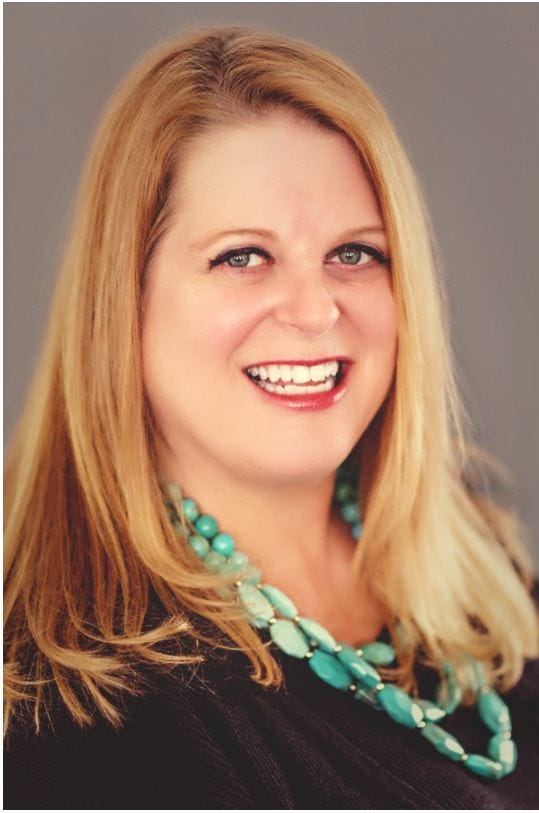
Beth Nabors, 61, is the CEO of Journeys | The Road Home, a community-based non-profit providing shelter and social services to people experiencing homelessness or housing insecurity in Chicago’s north and northwest suburbs. Beth holds a bachelor’s degree in psychology and a master’s degree in educational psychology from Eastern Illinois University. She has served in the not-for-profit arena for her entire career. She and her husband Jeff live in the northwest suburbs of Chicago.
Charitable donations and fundraisers fuel the organization’s shelters, housing programs, and its compassionate outreach that meets people exactly where they are, helping them take that next step toward stability. For more information about Journeys | The Road Home, or to make a charitable donation, please visit www.journeystheroadhome.org.